
Wired vs Wireless CarPlay: Which Wins?
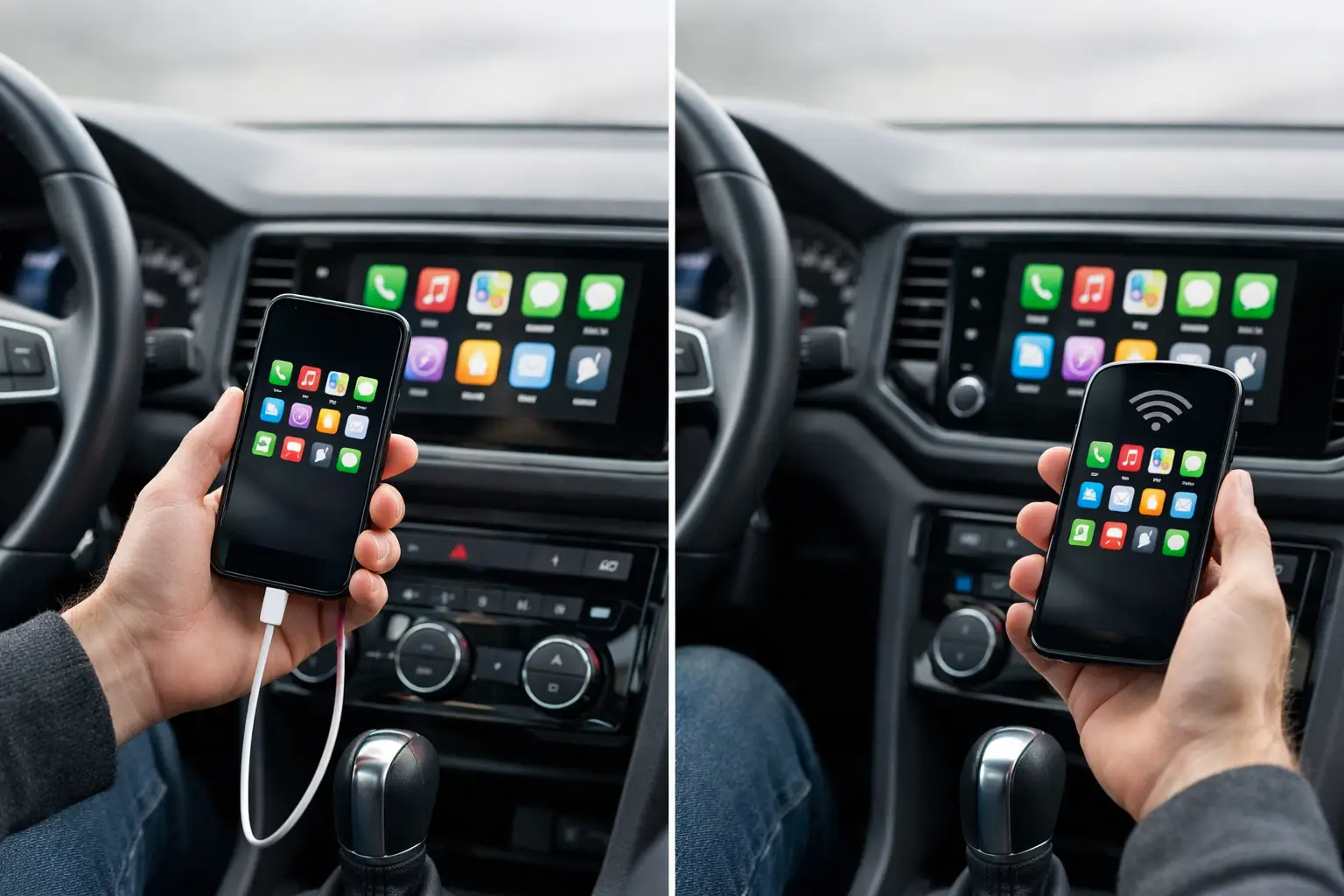
You notice it fast the first time you use both. Plug in with a cable and CarPlay pops up almost instantly. Go wireless and the cabin feels cleaner, but startup can lag a bit, connection quirks can show up, and your battery starts dropping before the drive is over. That is the real wired vs wireless CarPlay debate – not hype, just how your system behaves when you use it every day.
If you are upgrading a factory radio, adding a multimedia receiver, or trying to clean up your interior without giving up performance, the right choice depends on how you drive. Some people want the fastest, most dependable connection possible. Others care more about getting in, starting the vehicle, and having CarPlay connect without touching a cable. Both are good options. They just solve different problems.
Wired vs wireless CarPlay: the real difference
At the basic level, both versions give you the same Apple CarPlay interface. You still get navigation, calls, texts, music, podcasts, Siri, and your supported apps on the dash screen. The difference is how your iPhone talks to the radio.
Wired CarPlay uses a USB connection. That means your phone is physically linked to the receiver, which usually gives you quicker startup, more stable data transfer, and built-in charging while you drive. For a lot of drivers, especially commuters and anyone who depends on maps every day, that consistency matters more than anything.
Wireless CarPlay starts with Bluetooth for the handshake, then switches to Wi-Fi for the main data connection. It feels more premium because you can leave your phone in your pocket or bag. No cable on the console, no plugging in for every short trip, and no exposed cords cluttering up a custom interior. For many newer vehicles and aftermarket head units, that convenience is the whole selling point.
What trips people up is assuming wireless is always better because it sounds newer. In real-world use, newer does not always mean better for every vehicle, every radio, or every driver.
Where wired CarPlay still has the edge
Wired CarPlay is still the benchmark for reliability. If your phone is plugged in, there is less chance of interference, random disconnects, or startup delays. That matters in South Florida traffic, on long drives across the state, or anytime you are relying on turn-by-turn directions and do not want to fight your system.
There is also the charging factor. CarPlay uses power, especially when you are running navigation, streaming music, taking calls, and keeping the screen active. With a wired connection, your phone is usually charging the whole time. With wireless CarPlay, your battery can drain faster than many drivers expect.
Audio performance is another point worth mentioning. In most daily driving situations, both setups sound very good through a quality system. But if you are serious about your sound and have invested in upgraded speakers, amplifiers, or a better head unit, a wired signal path often feels like the more dependable choice. It reduces one more variable in the chain.
Then there is compatibility. Some aftermarket radios simply handle wired CarPlay better than wireless, especially at lower price points. A clean install can make a huge difference, but the hardware still matters. If you want a system that works the same way every morning, wired is hard to beat.
Why wireless CarPlay is so appealing
Wireless CarPlay wins on convenience, plain and simple. You start the vehicle, your phone connects, and you are off. No cable to grab, no worn-out charging cord, and no extra clutter hanging around your shifter or cupholders.
That is a big deal in vehicles where you care about the finish and flow of the cabin. If you have already invested in custom work, a fresh radio upgrade, better lighting, or a more refined interior setup, wireless CarPlay keeps the space looking cleaner. It feels modern because it is easier.
It is also great for short trips. If you are running errands, driving to the office, or jumping between job sites, plugging in every time gets old. Wireless makes those quick drives smoother.
The trade-off is that convenience sometimes comes with compromise. Depending on the phone, radio, and vehicle, you may see slightly slower startup times. You may also notice occasional connection hiccups, especially in crowded wireless environments or with certain adapters. That does not mean wireless CarPlay is unreliable across the board. It means the quality of the equipment and installation matters a lot.
Battery, lag, and connection issues
This is where the decision gets practical.
If your phone battery is already taking a beating during the day, wireless CarPlay can become annoying fast. Navigation and streaming over a wireless connection pull more power, so even a decent battery may drop steadily on longer drives. Some vehicles include wireless charging pads, which sounds like the perfect fix, but those pads can run hot and may not charge as quickly as you want when CarPlay is active.
Lag is another issue people notice. Usually it is minor – a slightly slower app launch, a pause before the interface appears, or a touch more delay when switching functions. For some drivers, that is nothing. For others, especially people who expect an immediate response, it becomes one of those small frustrations that keeps showing up.
Connection stability depends on the hardware. A strong aftermarket receiver from a trusted brand, installed correctly, usually performs much better than a bargain setup or a questionable add-on adapter. If you are trying to convert a wired-only system to wireless using a third-party dongle, results can vary a lot. Some work well. Some feel like a shortcut because they are one.
Which setup makes more sense for your vehicle
If you spend a lot of time behind the wheel, wired CarPlay makes a strong case. It is ideal for commuters, road trippers, rideshare drivers, and anyone who wants maximum dependability with minimum fuss once plugged in. It also fits drivers who care about keeping their phone charged and want the most stable experience possible.
If your trips are shorter and you value a cleaner cabin, wireless CarPlay may be the better fit. It is especially appealing in premium daily drivers and custom builds where convenience and appearance both matter. If your system connects quickly and consistently, it is easy to love.
There is also a middle-ground answer that works for a lot of people. Choose a receiver that supports both wired and wireless CarPlay. That gives you flexibility. Go wireless for quick trips around town, then plug in on longer drives when you want charging and maximum stability. That kind of setup gives you options instead of locking you into one habit.
Wired vs wireless CarPlay in aftermarket upgrades
This is where professional installation matters more than most people realize. CarPlay is not just about the screen on the dash. It is about how the receiver is integrated, where the USB access is placed, how clean the wiring is, whether factory features are retained, and how the whole system feels once it is finished.
A bad install can make a good radio feel average. A clean, well-planned install can make the entire vehicle feel newer.
If you are upgrading an older factory stereo, the wired vs wireless CarPlay question should be part of a bigger conversation. What kind of screen do you want? Are you also upgrading speakers or adding an amp? Do you want backup camera integration, better phone call quality, steering wheel control retention, or a cleaner dash layout? The best answer is not always the most expensive feature. It is the setup that fits your vehicle and how you actually use it.
For drivers who care about both tech and finish, this is where working with a shop that understands electronics and custom installs pays off. Tint Station sees that every day with customers who want more than a box stuffed into the dash. They want a system that looks right, works right, and holds up.
So which one should you choose?
Choose wired CarPlay if you want the fastest connection, built-in charging, and the most dependable day-to-day performance. Choose wireless CarPlay if convenience, a cleaner interior, and cable-free use matter more to you.
If you are still stuck, think about your most common drive, not your ideal one. The best setup is the one that fits your routine on a Monday morning, not just what sounds good on a spec sheet.
A smart CarPlay upgrade should make your vehicle easier to live with every single day. If you are planning a new radio, a cleaner dash setup, or a full electronics upgrade, the right answer is the one that matches your driving habits and is installed with care from the start.